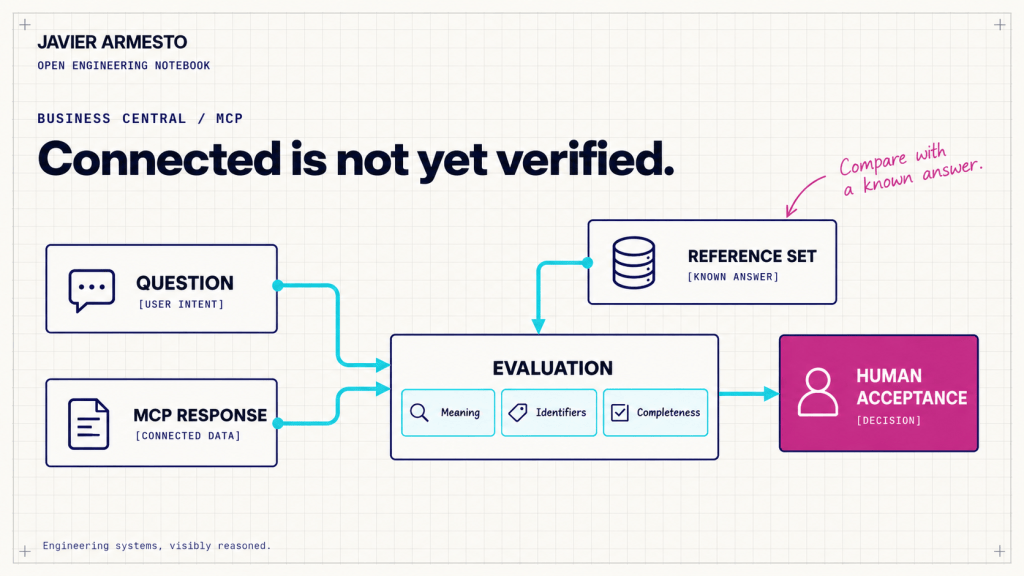
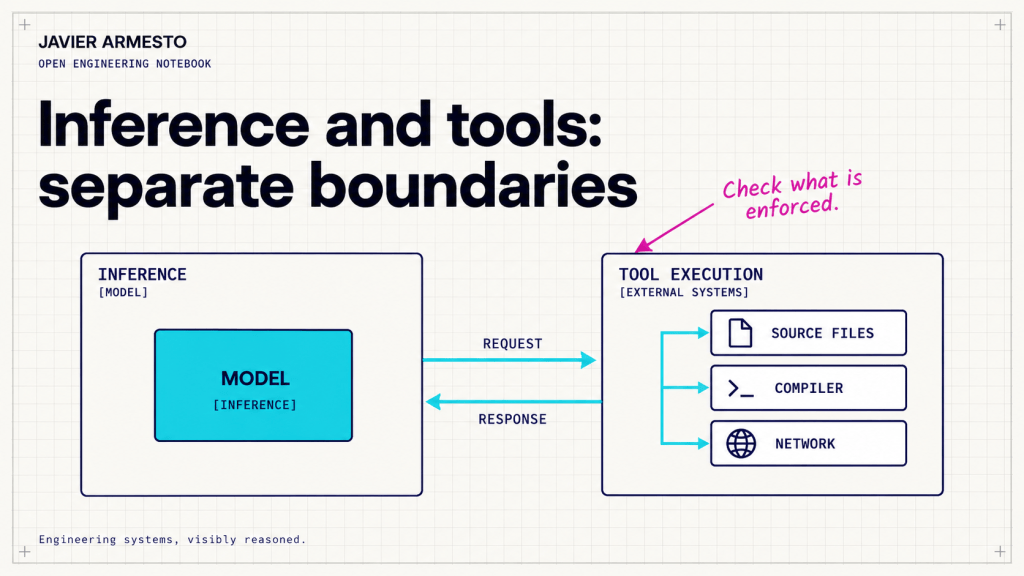
A successful connection confirms that an AI client can reach a service. It does not confirm that the client interprets a business question correctly or returns a complete answer.
For Business Central MCP, I would add a small acceptance exercise after the connection work. The exercise should use a reference set prepared independently of the agent.
Scope the first test
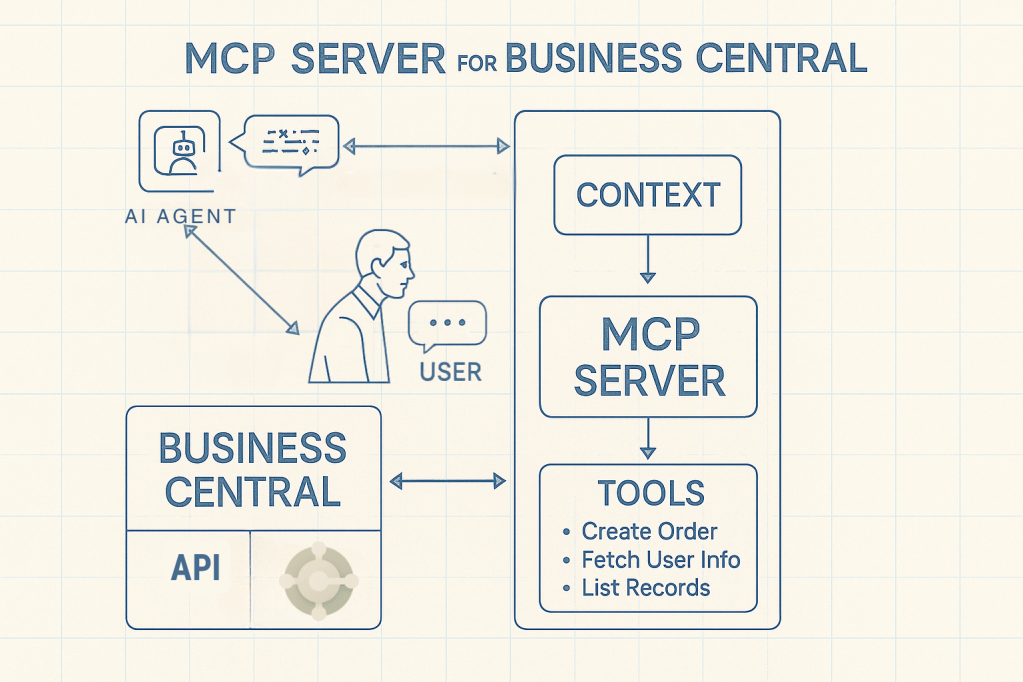
Microsoft documents a default configuration with dynamic discovery of eligible read-only APIs under the signed-in user’s permissions. Administrators can change the default, so the effective configuration must be checked. [4]
For the proposed exercise, select a demonstration company, fictional data and a read-only user and configuration. Inspect the exposed tools before asking business questions. Keep Data Query Tools outside this first test; Microsoft currently documents that feature as preview. [5]
Prepare three questions
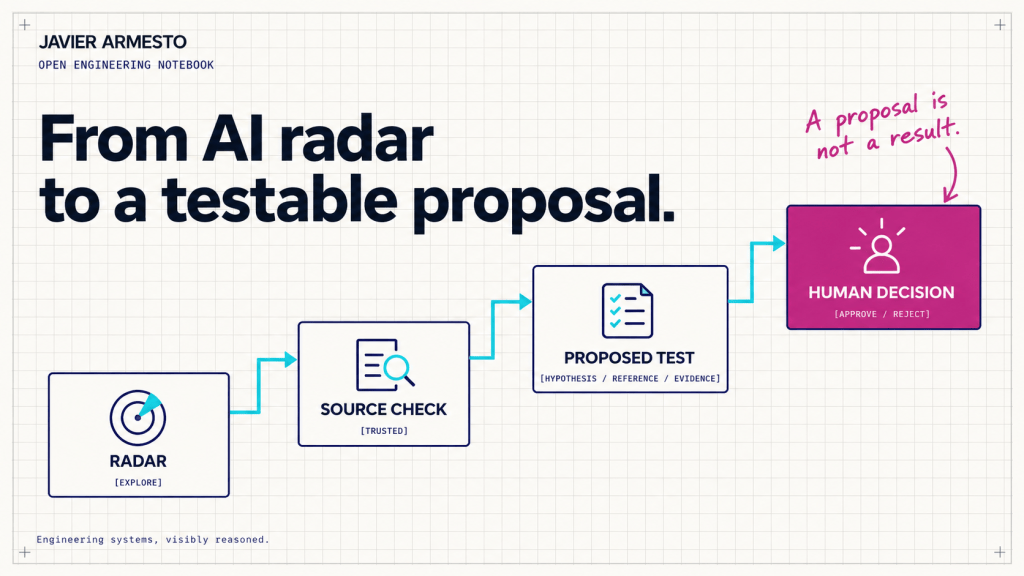
The following is a proposed test set, not a report of completed testing:
| Question | Reference to prepare | Main issue to check |
|---|---|---|
| Find an item by an exact identifier | Identifier and expected record | Exact matching and missing records |
| List pending orders using an agreed definition | Expected order identifiers and filters | Business meaning and completeness |
| Show lines for one selected order | Expected lines and quantities | Correct document and full line set |
Check that the selected APIs expose the information required by each question. Replace any question that cannot be answered within the agreed scope.
Evaluate meaning and coverage
For “pending orders”, define the business rule first. It could mean orders with a remaining quantity to ship, but another process may use a different definition. Write the chosen rule into the reference.
Record the company, environment, filters and time of the comparison. Match record identifiers as well as totals. If a response is limited or paged, check whether the agent explains that limitation.
Add a negative case with an identifier that does not exist. Add an ambiguous request where clarification is needed. These cases help test whether the agent recognises missing information instead of filling the gap with a plausible answer.
Decide what acceptance means
For this small test set, I would require correct identifiers and values, the agreed scope and an explanation of incomplete results. I would also require the agent to ask for clarification when the question has more than one relevant interpretation.
Three passing questions would support the next evaluation step. They would not establish reliability for every company, permission set or workload.
For AL teams, this exercise provides feedback on API design. When the business rule is difficult to express, the issue may sit in the contract or the data exposed to the agent. Resolve that before expanding the workflow.
Sources: [4] MCP overview. [5] Server configuration.
























Deja una respuesta